There’s been a bit on these past few months, that’s for sure.
We’ve got a new Defence & Aerospace company at the hub, a $150M Series C for Advanced Navigation and a free trade agreement between Australia and the EU announced after an eight-year negotiation.
Coupled with those huge milestones are new frameworks and policy signals. It looks as if we’ll be able to tap into Horizon Europe, the Australia–United States Space Framework Agreement has surfaced in parliament, and Senator Ayres released both the Statement on Space and the subsequent Statement of Expectations just last week.
The Federal Government is signalling to its own space ecosystem and the world that Australia has clear expectations of itself to be a key player in the sector. It’s vindication of the work you have all done to this point, and will no doubt influence the conversations you have with investors and customers both at home and abroad. Against the backdrop of SpaceX’s IPO, the market is waking up at a similar time to the Federal Government.
With these ingredients combined, I’m cautiously optimistic and, in fact, excited. Policy, frameworks, market confidence and stakeholder alignment can attract key partners and investors to Australia to unlock the scale of our ecosystem’s deep tech ventures.
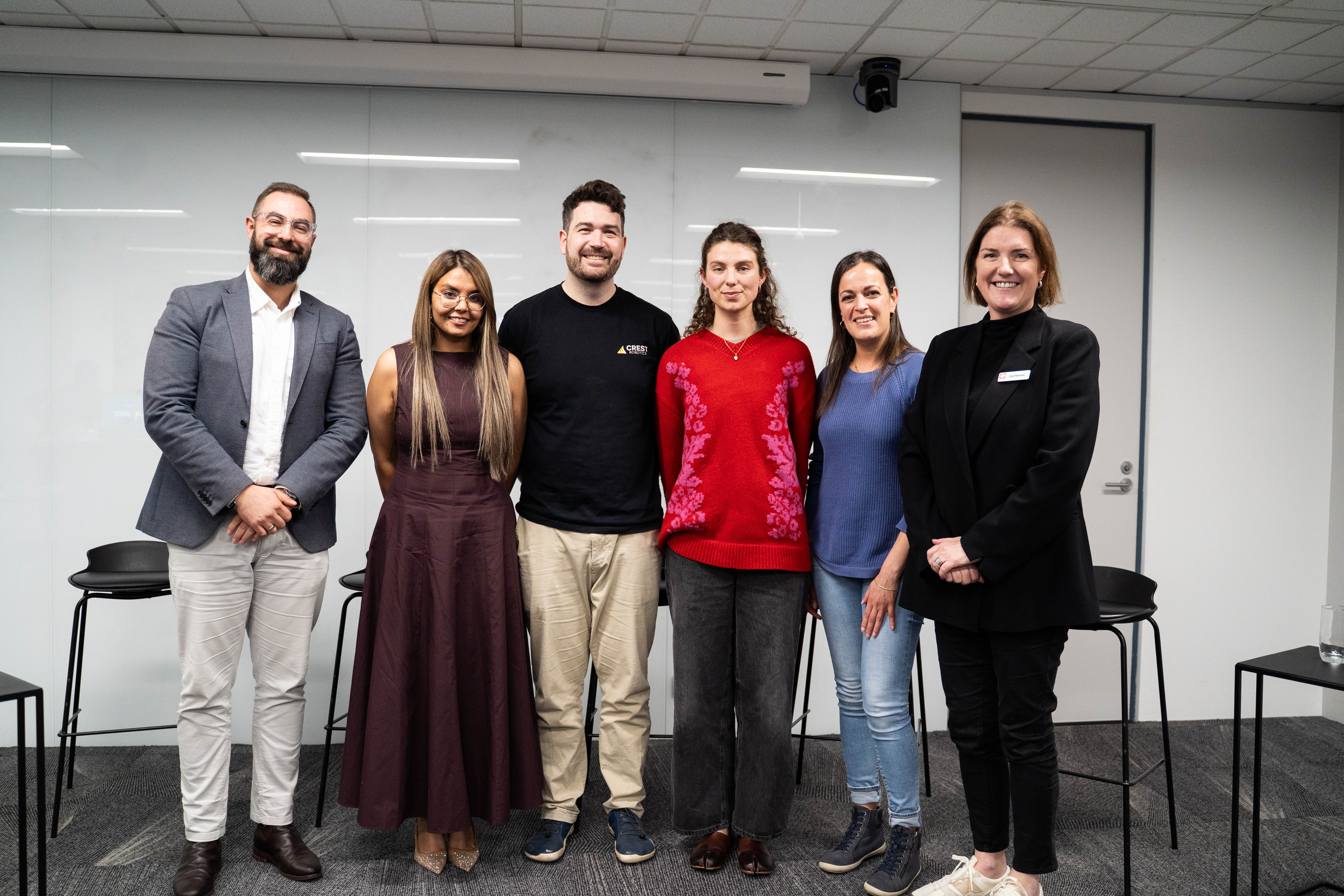
Some of these ventures on the journey to scale joined us for Space Hub Connect last night. We saw Liza sit down with Ruby Jones, MJ Akter, Dr. Clyde Webster, and Heba Khamis to unpack how each of them is building their business.
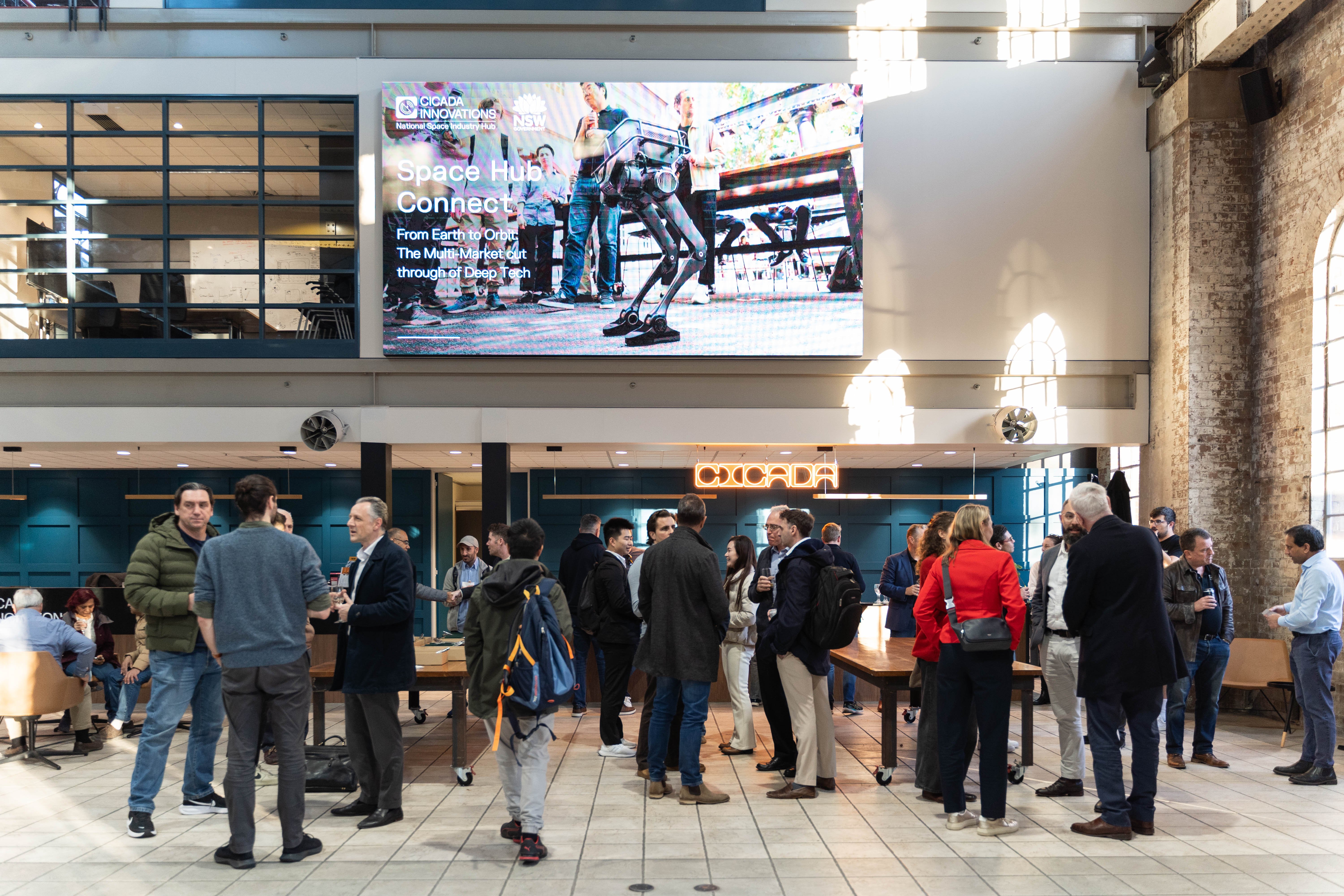
The panel was as insightful as it was candid. Each of the quartet openly shared their learnings, advice and insights to the 100-strong crowd.
Ruby's 'grounded' mantra is still ringing in my ears.
"If you have a technology where you can demonstrate and develop that commercial traction and that revenue stream on the ground first, that can then fund your trajectory into space."
It's a discipline that runs through how Aquila operates, as is its hive mind mentality.
"A very common death of hardware startups is having too many products. The entire company is surrounded by a single project, a single goal, a single milestone at any given time."
Clyde echoed Ruby’s sentiments in a lot of ways.
“Every single project is contributing to our core underlying IP. Most of our projects are built on the same technology stack. So as we go into more scaled opportunities, we've actually got quite a significant chunk of the underlying technology ready to go.”
And on Crest’s go to market strategy?
“We can go into these organisations and start building trust and credibility by providing strategic advice and market advice, rather than just going and selling our products. We sell our credibility and build trust with the customer base to a point where they actually start to tell us their problems.”
Heba and Contactile have been around since 2019, and have waited for the rest of the world to catch up. As frustrating as it was, it’s those moments that delivered the most poignant learnings, which she shared with those in the room.
“The challenge for us is sticking around long enough for the market to realise that this is what actually solves the problems they have.
"It doesn't matter how much you try to educate. If they're not ready, they're not ready,” she said.
“That has been our biggest challenge: surviving long enough and improving the technology in that time, so that when the market finally says ‘this is what we need’, we'll be like, ‘cool, it's ready’."
MJ’s had a pretty good week, with the Spiral Blue founder nominated for Startup Daily’s Best in Tech Awards in the Future Leader of the Year category. It’s fair to say you can tell why.
“Whenever I go to a customer discovery meeting, I just shut up and use the 80/20 rule. Before, I was like, ‘LiDAR is amazing, it can see through forest cover, blah, blah, blah.’ Then I figured out they don't care about technology. They care about, is this product going to solve our problem or not.”
While policy and market confidence are shifting our way, it’s clear that the tireless work ethic and resilience of our Space Hub ventures has been here the whole time.